
Wevah : The Power to Choose Together
Client/Target Audience
Creative Conscience | South and East Asian families, particularly young women
Role
Video Production Graphic Design UI & UX Design
Industries
Design for Social Equality
Date
April 2023
What is unique about Wevah? • It uses video design to spread awareness about underaddressed adverse issues caused by arranged marriage: o Developed through interviews and literature review. o Carefully crafted system design involving an app, a communication booth, and a community center. o Winner of competition within Syracuse University, resulting in its submission to external competitions. o Awaiting results from the UK based Creative Conscience competition.
Research Problem
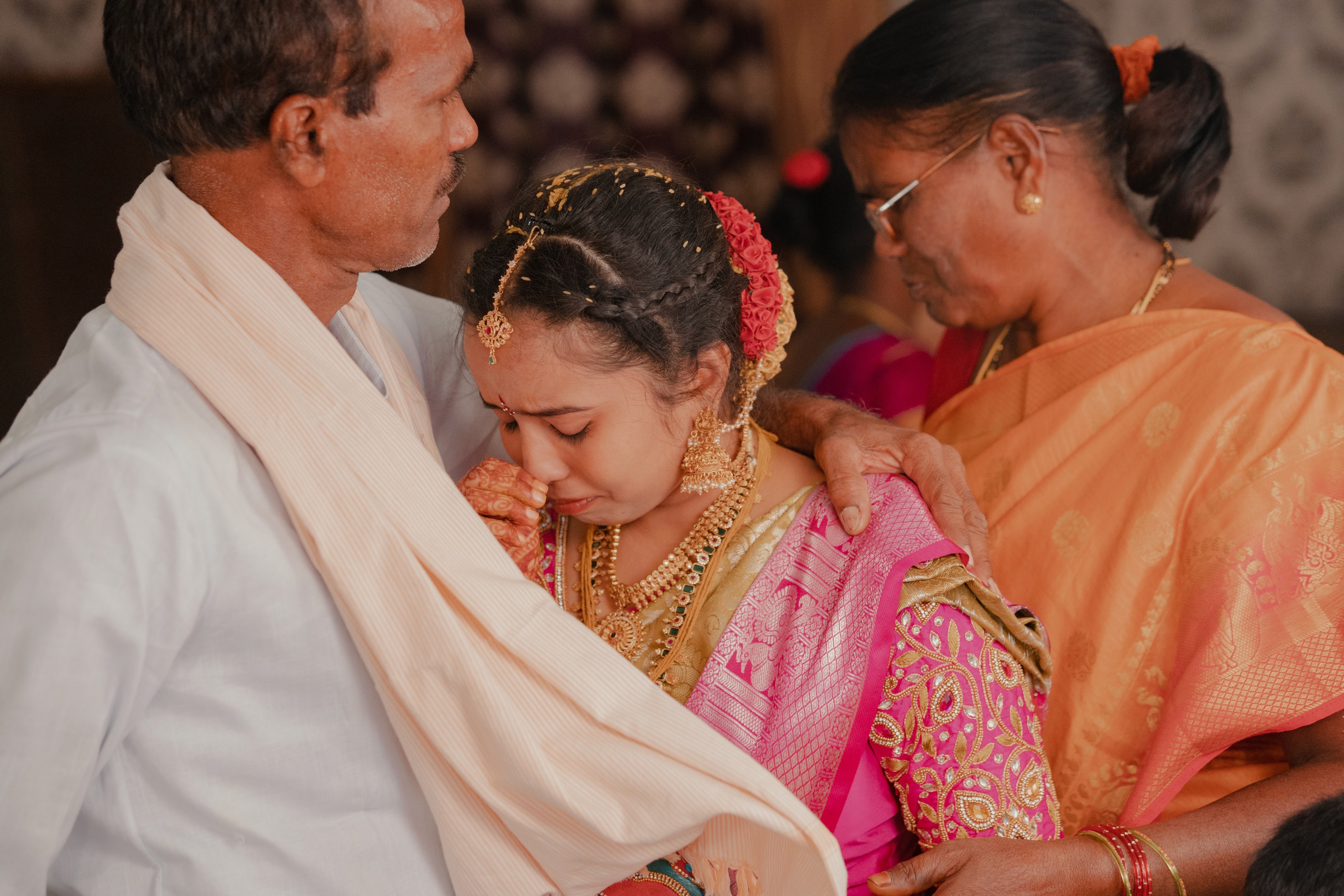
In this study arranged marriage has been approached in terms of recontextualization through system design using the ‘group locomotion hypothesis’ framework. Before delving into the subject matter, it is imperative to understand ‘group locomotion hypothesis’: Individuals feel pressured to succumb to uniformity within the groups that they are a part of because uniformity is considered desirable or integral for said group to attain its some or all its goals. While there are not many accurate statistics about endogamy/intra-caste marriage in India, an analysis of demographics from the year 2011 suggested that around 95% of the marriages were homogenous in terms of caste, which can be a result of the group locomotion hypothesis. Inter-caste displayed higher probability when the parents themselves were received higher education but not otherwise. This is part of a systemic problem that is difficult to uproot.
Solution
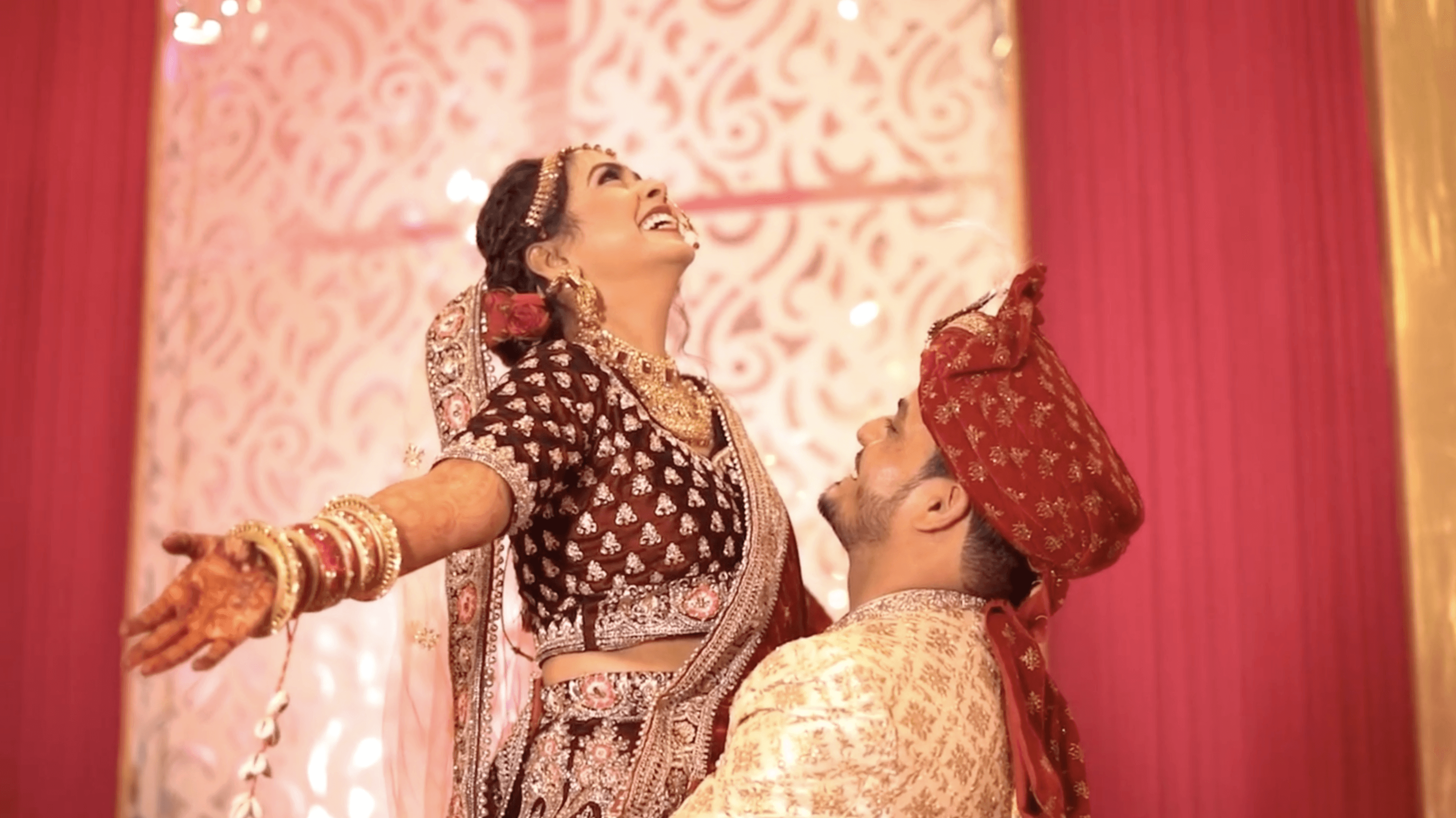
While family arranged marriage is the dominant type of marriage, it is to be noted that self-arranged marriage can lead to better outcomes than that of family or semi-arranged marriage. Cultural roots can lead to either a coercive or an arranged marriage but is it important to keep in mind that rejecting an embedded practice will be met can amount to a reflexive rejection from society, so it is better to engage in cultural negotiation. Injecting oneself into a deeply rooted system to orchestrate change must be executed gradually and carefully, abiding by the foot in the door technique. What if instead of rejecting the system outright, the individuals that are to get married made the first move by seeking a partner of their preference, while respecting the cultural preferences of their family? While intra-caste marriage is dominant in India, putting the power in the hands of the youth to make the first move while staying within the caste if necessary can move towards a self-arranged marriage, attaining a degree of control over the said crucial life-decision. This can help avoid the humiliation and mental health damage caused by rejecting through the family-arranged marriage, which leads individuals to desire to stray away from the process and seek a partner through their professional and social circles. Many individuals do not pursue this, as it can be challenging to tackle the existing framework, indicating the intensity of the group locomotion hypothesis. Educating parents can also play a role in facilitating the shift towards self-arranged marriages.
Ideation and Prototyping
Ideation was done in form of a literature review and an annotated bibliography, after which a grayscale themed video was designed to explore possible designs to address this poignant issue. The grayscale video below assesses from an attempted unbiased perspective, the negatives (darkest side) as well as the positives (lightest side) of family-arranged marriage. Gathering insight from other individuals through this method provides the range/grayscale of perspectives and even helps understand why the practice still exists today. It further provides an understanding as to how to challenge the existing framework with potential prototyping ideas, which are displayed at the end of the video.
The desire to choose partners informally can provide for an opening to design an intervention through the Wevah system design, in which individuals will have the opportunity to approach a sub-framework within the existing framework. The subframework can use that system design in the form of what can become a movement, normalizing the individuals presenting the choices to their family instead of the other way around. A small shift can give the power of choice to the individuals. Introducing an app, contact booth and a community center for the same can allow for this method to become prevalent, generating a method to use the group locomotion hypothesis to give the individuals the partial to full freedom of choice, depending on the family that they are from. While this cannot solve the problem entirely, it can serve as a reasonable, realistic start, empowering the individuals in the process. Currently, family-arranged marriages possesses a higher propensity for negative life events including problems with in-laws, which can stem from the compatibility of the spouses. If the individual has the power of choice over their partners through interacting and getting to know the partner well to evaluate whether the couple may be suitable for marriage, the individual can have a higher chance circumventing such negative experiences. If they do so while respecting the wishes of their families, their decision can appeal to both families suiting all parties in the equation. That is why Wevah proposes a system in which partners may match with one another first, following which once they interact and approve of each other, the families may be able to get involved. Rather than the family choosing the partner, the family can assess the partner that has been chosen by the individual. The individual being the early bird can allow them to meet the partner at least a year prior to getting married, which counters the common phenomenon of meeting the partner on the wedding day itself. Meeting a partner earlier through the app or booth can promote meeting in the community centers, allowing for bonding experiences, boosting the chances of a successful, well thought out and deliberate marriage for the individuals. While the group locomotion hypothesis is currently the setback through family arranged marriage, carefully administering a solution can transform the group locomotion hypothesis into a critical strength of the individuals through what can be described as self-arranged-family-approved marriage. The family does not lose power, while the individual gains some. Perhaps, this intervention can strengthen future arguments for further shifts in the power dynamics, providing for a platform for individuals to attain more freedom of choice, and therefore, long term success and happiness in the avenue of marriage. This can foster positive life experiences and is potential way forward.
Final Outcome
The final video of Wevah, the winner of an internal Syracuse University competition. Submitted to the Creative Consecious as the next step, this video describes the concept of the system design. It was developed using data gathered from the literature review, surveys and interviews, and the grayscale ideation video.
Here is an example of the functionality of the Wevah app. It helps individuals looking to get married to find partners. Only when the individuals approve of each other, will the parents get notified on the app. This gives the indivduals the power to choose for themselves while eventually involving the parents.
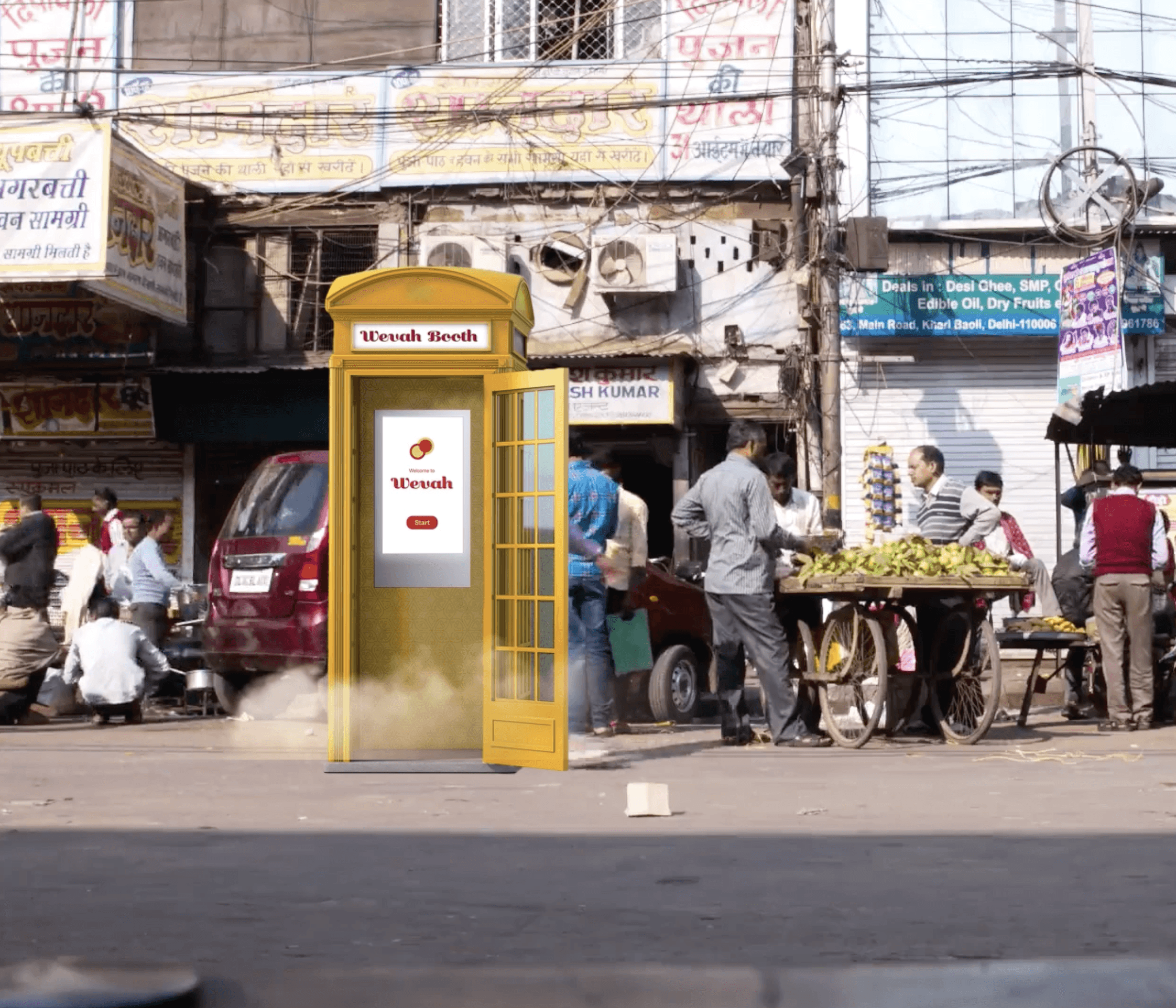
Here is an example of the Wevah booth. The booth concept is to be placed at multiple points across cities, spreading awareness about the system in the form of a campaign. The booth can also cannot to the app and help people find partners.

Each city is to have a community center. It will consist of: Bonding Zones (Restaurants, Cafes, etc.) | Mediator Clinic (Licensed marriage practioners that help solve disagreements) | Educational Progams (about Wevah).
Conclusion
The research and design culminated into a video pitch, that was submitted to competitions as mentioned above. The video is intended to spread awareness, while promoting conversation about a shift towards the power of choice for a decision that will have signifcant influence over the lives of the individuals. Competitions can produce engagement with the video, starting these much required conversations. This project will be pitched at multilple competitions in the future to tackle the adverse challenges of arranged marriage.